
What Is Digital Marketing? A Complete Guide to Digital Marketing and Its Strategies
Digital technology has changed the way people discover brands, search for products, communicate with businesses, and make purchasing decisions. Today, customers often search online before choosing a product or service. They explore websites, compare prices, read reviews, watch videos, and check social media before making a decision.
Due to this shift in consumer behavior, digital marketing is now a crucial component of contemporary company expansion.
Knowing digital marketing may help you reach the correct audience and establish a strong online presence, regardless of whether you run a small business, oversee a developing brand, or intend to launch an online venture.
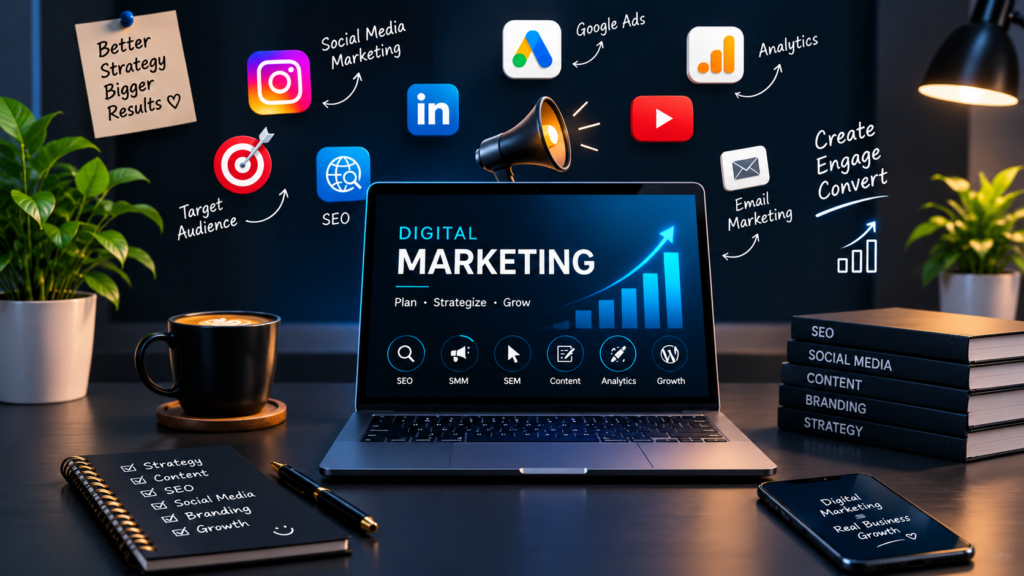
what is Digital Marketing?
Digital marketing is the practice of promoting products, services, or brands through digital channels and online technologies. It includes marketing activities carried out through search engines, websites, social media platforms, email, mobile applications, and online advertising.
Unlike traditional marketing methods such as newspaper
For example, when a business appears in Google search results, shares content on Instagram, runs Facebook advertisements, or sends promotional emails, it is using digital marketing.
The primary goal is to reach relevant audiences, increase brand awareness, generate leads, build customer relationships, and support business growth.
However, digital marketing is not just about selling products online. It also involves building trust, communicating brand values, sharing useful information, and developing long-term relationships with customers.
advertisements, printed brochures, and billboards, digital marketing enables businesses to connect with potential customers through online platforms.
How Does Digital Marketing Work?
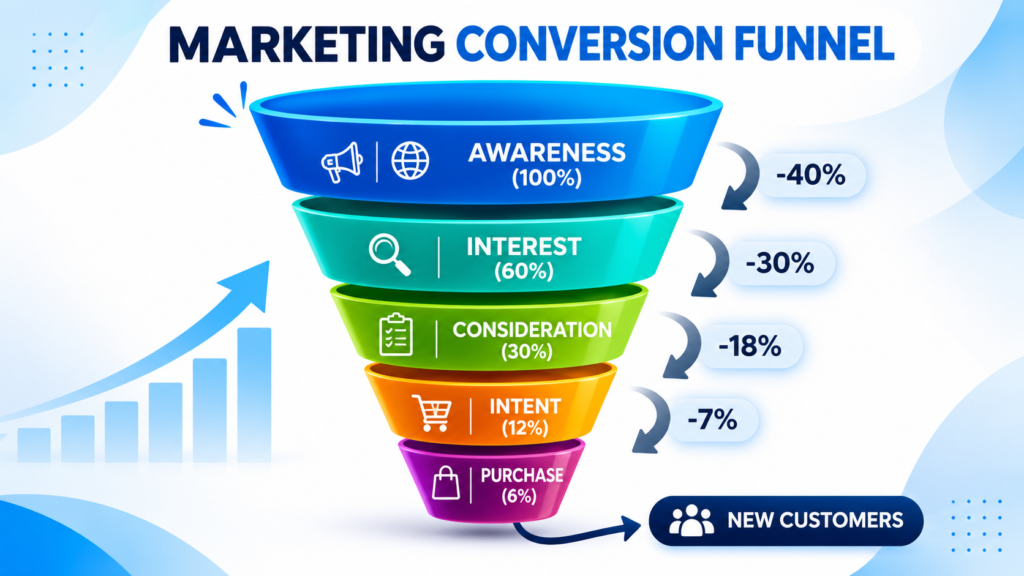
Digital marketing works by combining different online channels to attract potential customers, engage them with relevant content, encourage conversions, and maintain customer relationships.
The process begins with understanding the business, its objectives, and the people it wants to reach.
A typical digital marketing process involves the following steps:
1. Understanding the Target Audience
Identify potential customers by researching their interests, needs, location, online behaviour, and purchasing preferences.
2. Building an Online Presence
Create a professional website and maintain relevant social media profiles so customers can discover and learn about the business.
3. Creating Valuable Content
Publish informative blog articles, videos, images, and social media posts that attract attention and communicate the brand’s message.
4. Reaching the Right Audience
Use SEO, paid advertising, and social media marketing to connect with people who are interested in the products or services.
5. Generating Leads and Conversions
Encourage visitors to take meaningful actions, such as submitting an enquiry, filling out a contact form, booking an appointment, or making a purchase.
6. Measuring and Improving Results
Use analytics tools to evaluate performance, understand customer behaviour, and identify opportunities for improvement.
What Are the Main Types of Digital Marketing?
Digital marketing includes several channels and techniques, each serving a different purpose. When combined effectively, they create a complete marketing approach that supports business objectives.
•Search Engine Optimization (SEO)
•Social Media Marketing (SMM)
•Content Marketing
•Search Engine Marketing and Pay-Per-Click Advertising
•Email Marketing
•Affiliate Marketing
•Influencer Marketing
•Video Marketing
Why Is a Website Important in Digital Marketing?
A website is one of the most valuable foundations of a business’s online presence. While social media platforms help businesses interact with audiences, a website provides a central space where visitors can learn about the brand, explore services, access useful information, and get in touch.
A professional website offers several advantages:
Build Brand Credibility: A well-designed website creates a positive first impression and provides visitors with essential business information.
Improve Search Visibility: SEO-friendly website pages and informative content help search engines understand the business and its offerings.
Showcase Products and Services: Dedicated pages allow businesses to explain their products, services, and unique value.
Generate Leads: Contact forms, enquiry buttons, and clear calls to action make it easier for visitors to connect.
Share Valuable Information: Blog posts, guides, and articles help answer customer questions and demonstrate expertise.
Support Customer Communication: Contact information, FAQs, WhatsApp links, and other communication options make it easier for customers to reach the business.
Website design and digital marketing should work together. A visually attractive website also needs useful content, simple navigation, mobile responsiveness, and a clear purpose to provide a positive user experience.
What Is Local SEO and Why Does It Matter?
Local SEO is the process of improving a business’s visibility in location-based search results. It is particularly valuable for businesses that serve customers in specific cities, towns, or geographical areas.
For example, someone searching for a bakery in Palakkad is likely looking for nearby options rather than businesses located in another state.
Local SEO helps businesses become more visible to people searching for relevant products and services in their area.
Important local SEO activities include:
- Creating and optimizing a Google Business Profile.
- Keeping business information accurate and up to date.
Using relevant location-based keywords. - Adding high-quality business photos.
- Encouraging genuine customer reviews.
- Maintaining consistent business contact details across online platforms.
- Publishing useful, location-specific website content.
For local businesses, these activities can improve their chances of appearing in relevant searches and connecting with nearby customers.
For businesses in Palakkad, a location-focused SEO strategy can help attract relevant local audiences and strengthen their regional online presence.
What Is a Digital Marketing Strategy?
A digital marketing strategy is a structured plan that explains how a business will use online channels to achieve specific marketing and business objectives.
Simply creating social media accounts, publishing random posts, or running advertisements without a clear direction may not deliver meaningful results.
An effective strategy connects every marketing activity with a defined business goal
- Define Business Goals
- Identify the Target Audience
- Analyse Competitors
- Select the Right Digital Channels
- Develop a Content Plan
- Set a Budget and Timeline
- Measure Performance
- Review and Improve
How Does AI Support Digital Marketing?
Artificial Intelligence (AI) is becoming an increasingly useful part of digital marketing. AI-powered tools can assist marketers with research, content planning, data analysis, customer communication, and creative tasks.
Some practical applications include:
Content Ideas: AI tools can generate topic suggestions, content outlines, and creative ideas to support content planning.
Keyword Research Support: AI can help organize keyword ideas and understand search intent. However, keyword opportunities should still be evaluated using reliable SEO research tools.
Social Media Planning: Marketers can use AI to develop content calendars, caption ideas, and different versions of social media posts.
Data Analysis: AI-powered tools can help identify patterns, summarize reports, and understand marketing performance.
Customer Support: Chatbots can respond to frequently asked questions and guide website visitors towards relevant information.
Advertising Support: AI features available in advertising platforms can assist with bidding, audience optimization, and creative testing.
Although AI can improve efficiency, it should support human creativity and decision-making rather than replace them.
Accurate information, original ideas, brand understanding, ethical judgment, and meaningful communication remain essential for successful digital marketing.
Conclusion
Building a Strong Online Presence Through Digital Marketing
Digital marketing goes far beyond publishing social media posts or running online advertisements. It brings together different channels, strategies, and tools to help businesses connect with their audiences and achieve meaningful objectives.
From SEO and social media marketing to content creation, paid advertising, email marketing, website optimization, and analytics, each channel can contribute to a business’s online growth.
The key is to understand your audience, establish clear goals, select suitable marketing channels, create valuable content, and continuously evaluate performance.
Whether you are a startup, a local business, or an established brand, a well-planned digital marketing strategy can help you build a stronger online presence and explore new opportunities.
If you want to improve your business’s online visibility and reach the right audience, working with a Digital Marketing Strategist in Palakkad can help you identify suitable marketing opportunities and plan your next steps.
Ready to Build Your Online Presence?
Explore my digital marketing services and discover how strategic planning, creative content, SEO, and website solutions can help support your business goals.